
Growing Awareness of Pediatric Hearing Health
If you’ve ever taken your child to the Saturday Morning Market in
By: admin | October 27, 2026
If you’ve ever taken your child to the Saturday Morning Market in St. Petersburg, you know how much is going on. Between the music, people talking and vendors calling out, there’s plenty competing for their attention.
Your child might miss something you say or turn toward a sound that you barely noticed. Most of the time, you’re probably more focused on keeping up with them than thinking about their hearing.
As children grow, we tend to pay attention to things like how they’re talking, doing in school or getting along with other kids. Hearing doesn’t always come up unless there’s an obvious problem.
After all, if your child responds when you call them, it’s natural to assume they’re hearing everything they need to. But hearing isn’t always that simple, and there’s a lot that parents may not realize about how it changes throughout childhood.
Hearing loss in children is more common than you might expect, and it doesn’t always begin when they’re babies. Some children develop hearing problems later, sometimes after an illness or repeated exposure to loud sounds.
Hearing loss also isn’t the same for every child. One child might have trouble hearing quiet voices, while another may struggle with certain pitches but hear other sounds just fine.
It’s also difficult to put one number on how many children have hearing loss. A child might pass their newborn hearing screening and develop hearing difficulties a few years later.
Fluid behind the eardrum can also cause temporary hearing problems, especially in younger children who get frequent ear infections.
Other children have hearing loss that doesn’t go away. Because these situations are different, the numbers depend on the children’s ages and whether researchers are counting temporary or permanent hearing loss.
Babies start reacting to sounds well before they’re old enough to talk. In the first few months, your baby might startle when something loud happens or quiet down when you speak.
Around six months, they may turn their head toward your voice or look for a toy that’s making noise. As their first birthday gets closer, many babies recognize their name and begin responding to familiar words like no or bye-bye.
Once children start walking and talking, you’ll see their listening skills develop in other ways. Between ages one and two, they may point to things you name or follow simple directions like bring me your shoes.
By age two, many children can follow short instructions without needing you to show them what to do.
Preschoolers begin handling longer directions and following conversations involving several people. Every child develops at their own pace, but losing a listening skill they previously had or consistently missing familiar sounds deserves a hearing check.
Babies and young children can’t always tell you when they’re having trouble hearing, so you may notice changes in how they respond to sounds. Some signs are easy to miss, especially when your child seems to hear certain things without any trouble.
Some early signs are:
Lasting hearing loss doesn’t usually improve when your child is feeling better or other symptoms have cleared. That doesn’t mean their hearing will always stay the same, though. Some children have stable hearing for years, while others experience changes as they grow.
The difference also matters when deciding what kind of care your child needs. Temporary hearing loss may improve on its own or after the cause is treated.
Lasting hearing loss may require hearing devices or extra support in the classroom. An audiologist can test your child’s hearing over time to see whether it’s improving, staying the same or changing.
Even temporary hearing difficulties deserve attention when they’re making it harder for your child to follow what’s being said.
A teacher may notice hearing difficulties that aren’t as obvious at home. Your child might do well when someone speaks directly to them but miss instructions given to the whole class.
Sitting closer to the teacher may make those instructions easier to hear. Teachers can also face students when speaking and put important information on the board, so children aren’t relying on hearing every word.
Some children need additional support during the school day. A teacher may use a microphone that sends their voice directly to a child’s hearing aids or another listening device.
Captions on classroom videos are another option, particularly when several people are speaking. Depending on your child’s needs, the school may arrange support through an individualized education program (IEP).
You can also share hearing test results with your child’s teachers and discuss which classroom situations are causing difficulties.
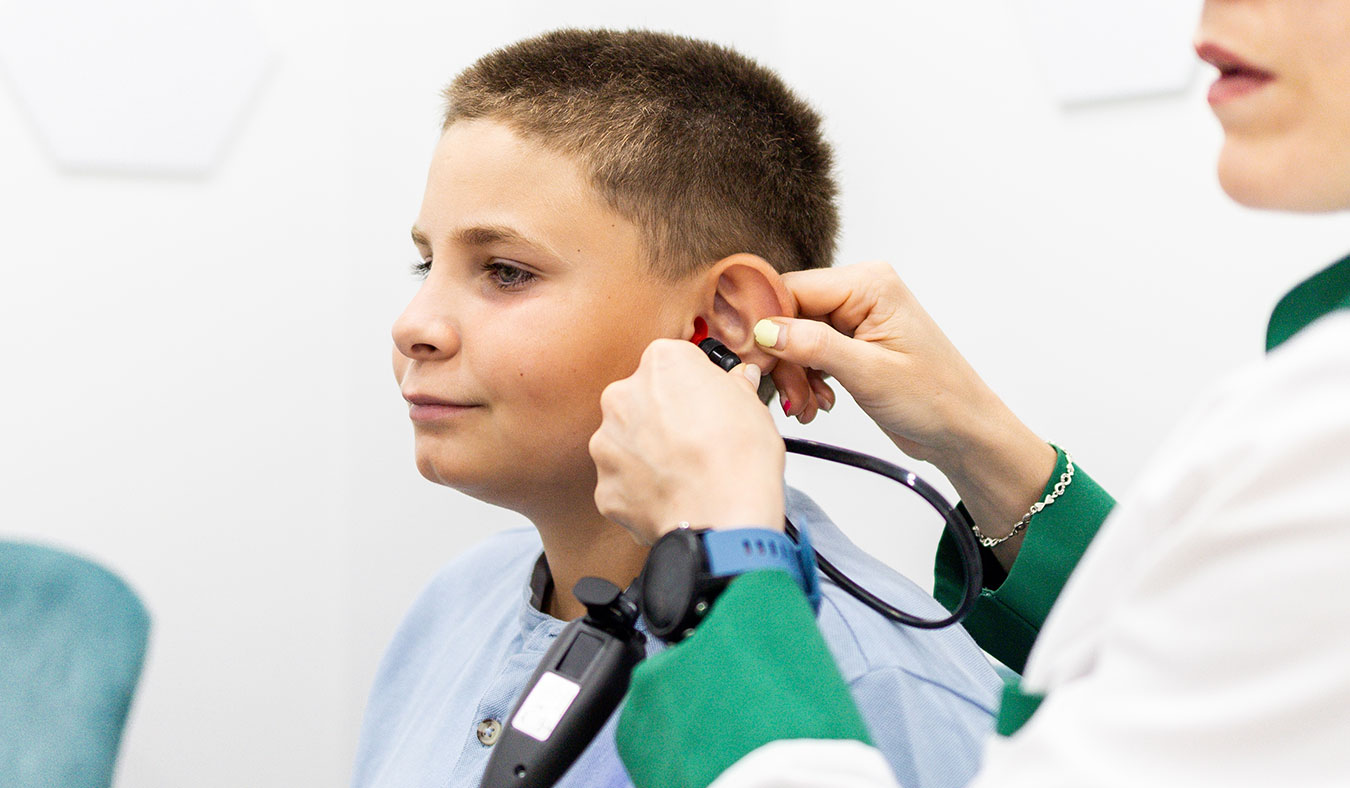
Hearing screenings are often part of school health programs or routine childhood checkups. They’re usually brief, with children listening for soft beeps through headphones and responding when they hear them.
The sounds are played at different pitches to check whether your child hears them at the expected levels. Since children don’t always mention hearing difficulties, these screenings offer another way to check their hearing as they grow.
A screening isn’t the same as a full hearing test, though. It tells you whether your child passed or needs further testing, rather than measuring exactly how much they can hear.
If your child doesn’t pass, an audiologist can do a more detailed evaluation.
Sometimes the screening needs to be repeated because a child was distracted or the room was too noisy. Keeping up with screenings also means there’s less chance of a hearing change going unchecked for several years.
Audiologists can now check a baby’s hearing without needing them to respond to sounds. One test, called otoacoustic emissions (OAE), uses a small probe placed in the ear to measure how the inner ear reacts to sound.
Another, called an auditory brainstem response (ABR), uses small sensors attached to the skin to record responses from the hearing nerve and brainstem. Both tests can be done while a baby is resting or sleeping, so there’s no need for them to follow instructions.
Some hearing screening tools are also small enough to use outside a traditional testing room. Automated devices can check responses and indicate when a child needs more testing.
For older children, audiologists may use computer-based activities that turn hearing tests into simple listening games.
A child might press a button or complete a task whenever they hear a sound. This gives audiologists a way to test children at different ages without expecting them all to respond in the same way.
Children who have trouble hearing may find certain situations at home or school more difficult than others. You don’t always need major changes to make conversations and daily routines easier to follow.
A few things you can try include:
At Hear Here Audiology, we can check your child’s hearing and talk through anything you’ve been wondering about. Maybe you’ve noticed something different lately, or perhaps it’s simply time for another hearing test.
We’ll explain what we’re checking and go over the results with you, so you know exactly what was found. Give us a call at 727-289-1212 to schedule a visit.
If you’ve ever taken your child to the Saturday Morning Market in
By: admin | October 27, 2026
Nobody has to explain heat to anyone living in St. Pete. You park in
By: admin | August 24, 2026
St. Petersburg knows how to put on an event. Between the waterfront
By: admin | May 18, 2026